Recorded call
What if the technician doesn't show up?
Is the commission on labor or on the full price?
Customers should be able to send photos of the problem.
In September I started building a product with people who don't write code. My business co-founder knows the market, our legal advisor knows what we can promise a technician, and a few weeks in, a marketing lead joined. Lots of judgment, very little shared vocabulary.
The product is Project Handyman (working name), a home-repair marketplace for Mexico. The hard side is supply. Most plumbers, electricians and HVAC technicians here work informally and find jobs by word of mouth, so one month is packed and the next is empty. We want the work to come to them, along with a verified profile and a reputation that grows over time.
A marketplace like this raises questions about labor law, payments and trust long before it raises questions about code. Is a technician a contractor or an employee? How long can we hold a customer's money? Can people pay in cash? None of those had an answer when we started.
Teams like this usually end up with one person who sits in every meeting and turns it into tickets and specs. That person was going to be me, and it stops working after a few weeks. So before writing much code, I designed how we would work.
Three rules
People talk. Our best thinking happens on long calls where we walk through the product screen by screen. Every call is recorded, and a routine turns it into Jira tickets. Talking is the interface.
Standard tools. Jira, Confluence, Figma, GitHub and Loom. A new engineer, advisor or investor can find their way around on day one, and nothing important depends on me remembering it.
Claude connects everything. Through MCP, the same agent can read a transcript, update a ticket, write a Confluence page and check a Figma frame. That's how a decision made by someone who doesn't code reaches engineering without me relaying it.
The layer in between
Most of my October went into the layer between product and engineering: deciding where each kind of information lives, writing the conventions that make a ticket a decision, and tuning the routines until an hour-long call could turn into tickets with nobody taking notes.
Product
- Recorded conversations
- Open questions and decisions
- Legal and business constraints
AI layer
- Routines that triage every meeting
- Agents that write the docs and ADRs
- MCP links across every tool we use
Engineering
- Architecture decision records
- Figma frames tied to their tickets
- Build tickets that carry their context
- A repository ready for coding agents
A conversation goes through six steps before it becomes code:
Conversation
Triage
Decision
Record
Design
Build
Two kinds of tools
Source of truth
- Confluence for the product, the business model, the decision log and the architecture
- Figma for every screen
- GitHub for the code
This is the reference.
Glue
- Loom records every conversation
- Claude interprets it and acts through MCP
- Jira moves the work along
Operational and short-lived.
Jira has four epics: open product decisions, legal and business questions, prototype changes and architecture. Its tickets are disposable. Once the outcome lands in Confluence, Figma or the code, the ticket is done, and nobody has to dig through old ones to learn how the product works.
The reference side has one rule: every piece of information lives in exactly one place. When our product docs existed in both the repo and Confluence, I deleted the five docs in the repo, about a thousand lines, and left a README that points to Confluence.
Agents write, people decide
The meeting routine runs almost unsupervised, and I'm fine with that. A slightly wrong ticket takes a minute to fix. A conversation nobody wrote down is gone for good.
Documentation is the opposite. Agents write every Confluence page and architecture record, but only after long working sessions where I argue the problem through and make each call. My partners use Claude with Jira too: they ask Claude what's on their plate, tell it what they decided, and Claude updates the tickets.
Working with people who don't write code
Walkthroughs on the prototype. We review the prototype screen by screen, so feedback lands on something concrete. On one call someone mentioned, almost as an aside, that you couldn't pick a technician on the offers screen. The meeting routine turned that remark into a bug ticket tagged with that meeting, headed for Figma and the code.
Costs in pesos. Every technical option comes with a monthly price. Once we priced a text message for every sign-in, nobody needed a technical argument to replace one-time codes with passwords. I priced infrastructure and each completed job the same way, and those numbers went straight into our margin model.
Engineering at the business table. Some business rules came out of technical constraints. A card payment can only be held for a limited time, so we cut the window for filing a claim from 72 to 48 hours, which keeps every dispute inside the hold. That's the kind of call that's easy to miss when the people writing the policy and the people building the payments flow never talk.
One decision, end to end
On October 6 we noticed that the business model and the prototype calculated the commission differently. Here's the path that question took.
- Oct 6Jira
The question gets a ticket
It's filed under open product decisions. - Oct 15Loom · Claude
It comes up in a meeting
The meeting routine notes on the ticket that it still needs a decision, with a link to the recording. - Oct 27Jira
It's decided
My business co-founder records the decision on the ticket through Claude. - Oct 27Confluence
It's recorded and closed
An agent adds it to the decision log and the business model, and the ticket closes with links to both. - Oct 27Figma · App
It becomes work
One ticket updates the affected screens; another updates the app once the designs are ready.
What it produced
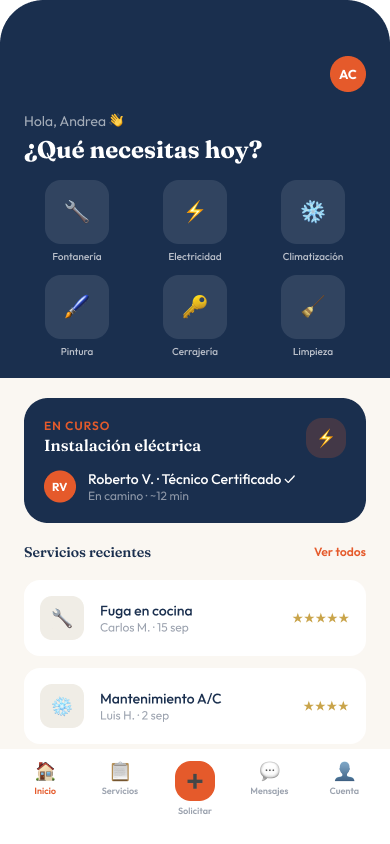
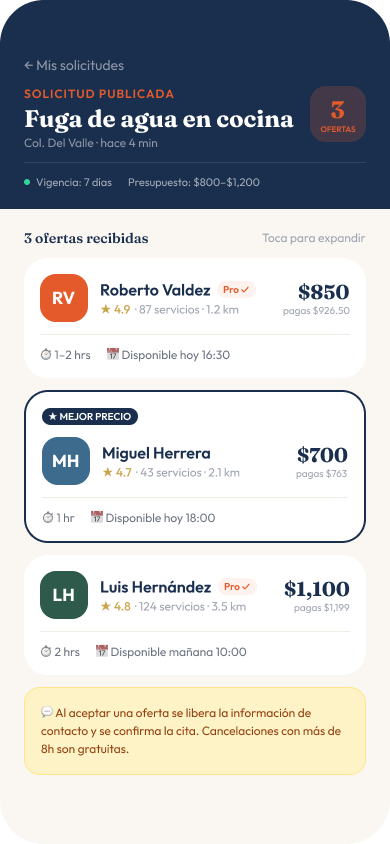
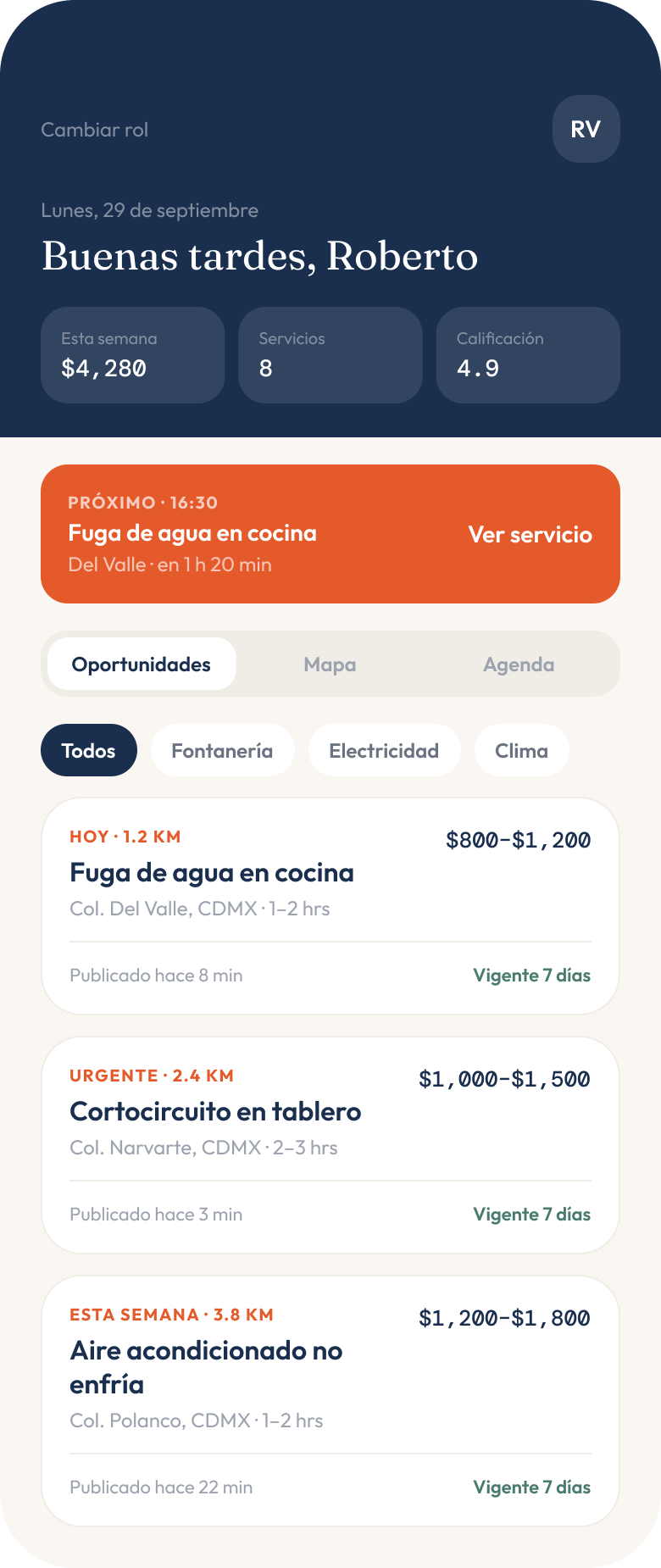
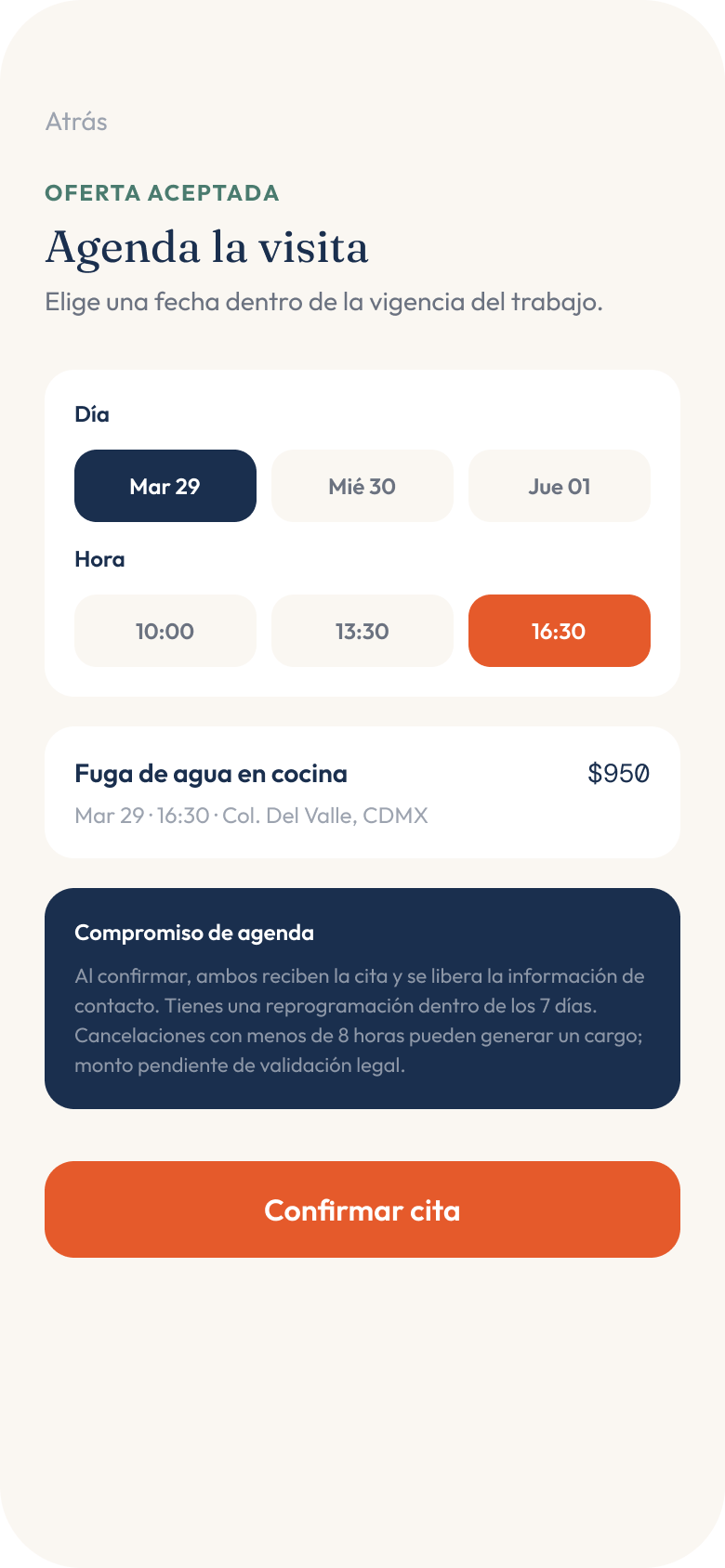
- A designed product. Customer and technician flows in Figma.
- A working prototype. Our first screens came out of an AI design tool, Figma Make, as a 3,000-line web app. I used it as a reference and rebuilt it as a native Expo app on mock data for both sides of the marketplace. An
AGENTS.mdtells coding agents how the project works. - An approved architecture. One Expo app, three NestJS services on Cloud Run split by security boundary, Firestore and Cloud Storage behind the API, and domain events on Pub/Sub. It's designed to cost close to nothing until there's real traffic, and each choice has an ADR with the alternatives we rejected and what it costs.
- A business backlog. Labor, tax, payments and privacy questions, written up as tickets and ranked by urgency, ready for the lawyer and the accountant.
- A team building from tickets. Another engineer now picks up work with the decisions and designs already attached.
What's still rough
- Documentation still goes through me. The meeting routine turns calls into tickets, but every new Confluence page and ADR still waits for a working session with me. Fast at the start, a bottleneck now.
- Some questions have no owner. Plenty of them are legal and financial.
- Alignment is manual. Tickets, docs, designs and the prototype drift apart between meetings, and we fix it when someone notices. That needs a real process.
- Design is ahead of code. The latest decisions are in Figma; the prototype hasn't caught up.
- Code hygiene came last. Early commits went straight to main with no pull requests or CI. Fine solo, a problem with a team.
What's next
Owners for every ticket, CI and app builds so the whole team can install the prototype, the first backend services, and the legal and tax questions between us and a pilot. Later I want the same discipline on the code side, with a spec, research, plan, execute and verify pipeline for coding agents that I'm building as an open framework.
If you're doing something similar, I'd like to hear about it.